
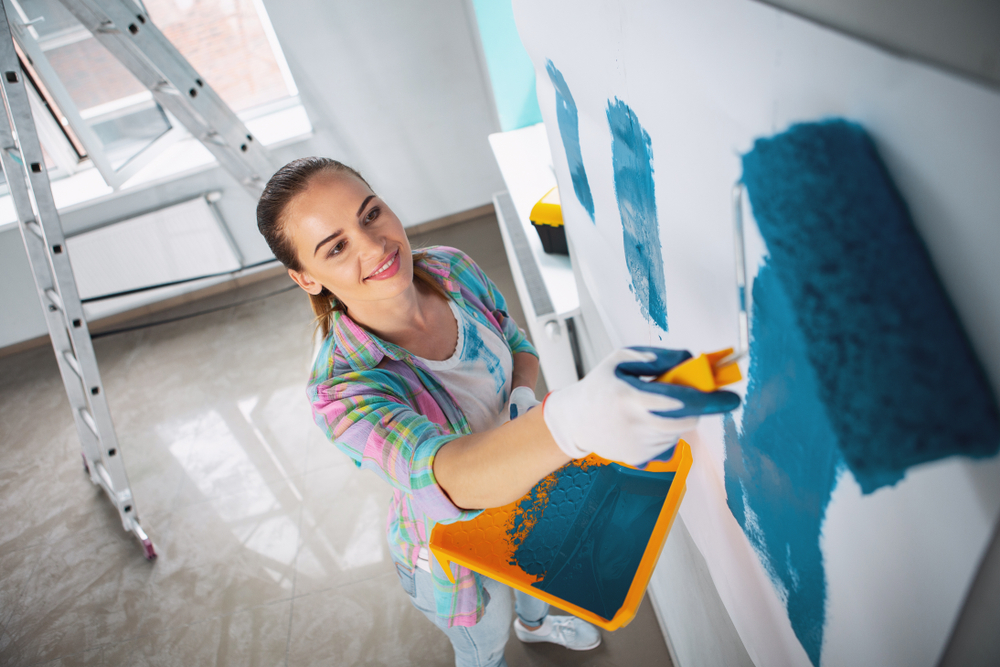
The word ombré comes from the French word meaning shaded. In interior design, this trend is used to create feature walls that transition dark tones into lighter ones.
Our professional decorators at Scott Anson Painters and Decorators Ltd suggest these top tips for painting an eye-catching ombré effect wall.
Colour Combinations
The first step to creating an ombré effect feature wall should be to decide how many colour sections to use. Generally, two or three colours work well, with one pale colour, one medium colour and one darker shade. Choosing complementary colours from the same family tends to be easier to blend.
Prepare the Wall Surface
Once you have chosen your colours it’s time to prep the walls:
- How you prepare the surface may depend on the quality of the wall. Make sure it’s clear of dust and debris using a damp sponge or dry brush.
- A prime coat is advised to block out any colours underneath and give a smooth surface. Using a neutral base colour is often the easiest choice so the new colours are not affected.
- Using masking tape to cover any fixtures can give clean, crisp edges.
- Using light-coloured chalk, lightly mark out the areas of each colour section. To try and keep lines accurate, a spirit level can be used.
How to Create the Ombré Effect
Now it’s time to start painting. These instructions are based on using just two colours, but the principle can be adapted to add more colours.
- Using a roller, apply the lightest paint colour to the top part of the wall, and you should allow it to fully dry.
- With another roller, apply the darker paint colour to the bottom section of the wall and let it dry.
- You can use a brush to paint a wet edge on the darker section just below the line where the two colours meet. Then, use another brush to paint a wet edge on the lighter section just above where they meet.
- Now it’s time to blend the two wet colours; you can use a sponge or a brush. If using a brush, criss-cross motions will combine the colours well. If using a sponge, a dabbing technique could be better.
The blending tool you choose will change the overall effect. Using a stiff dry brush could give a more rustic effect, whereas using a dry sponge to combine the colours should give a smoother finish.
The ombré effect doesn’t just work on walls. According to Essential Home, it can also be applied to furniture and other surfaces in the home.